Understanding the Scottish Haggis Species
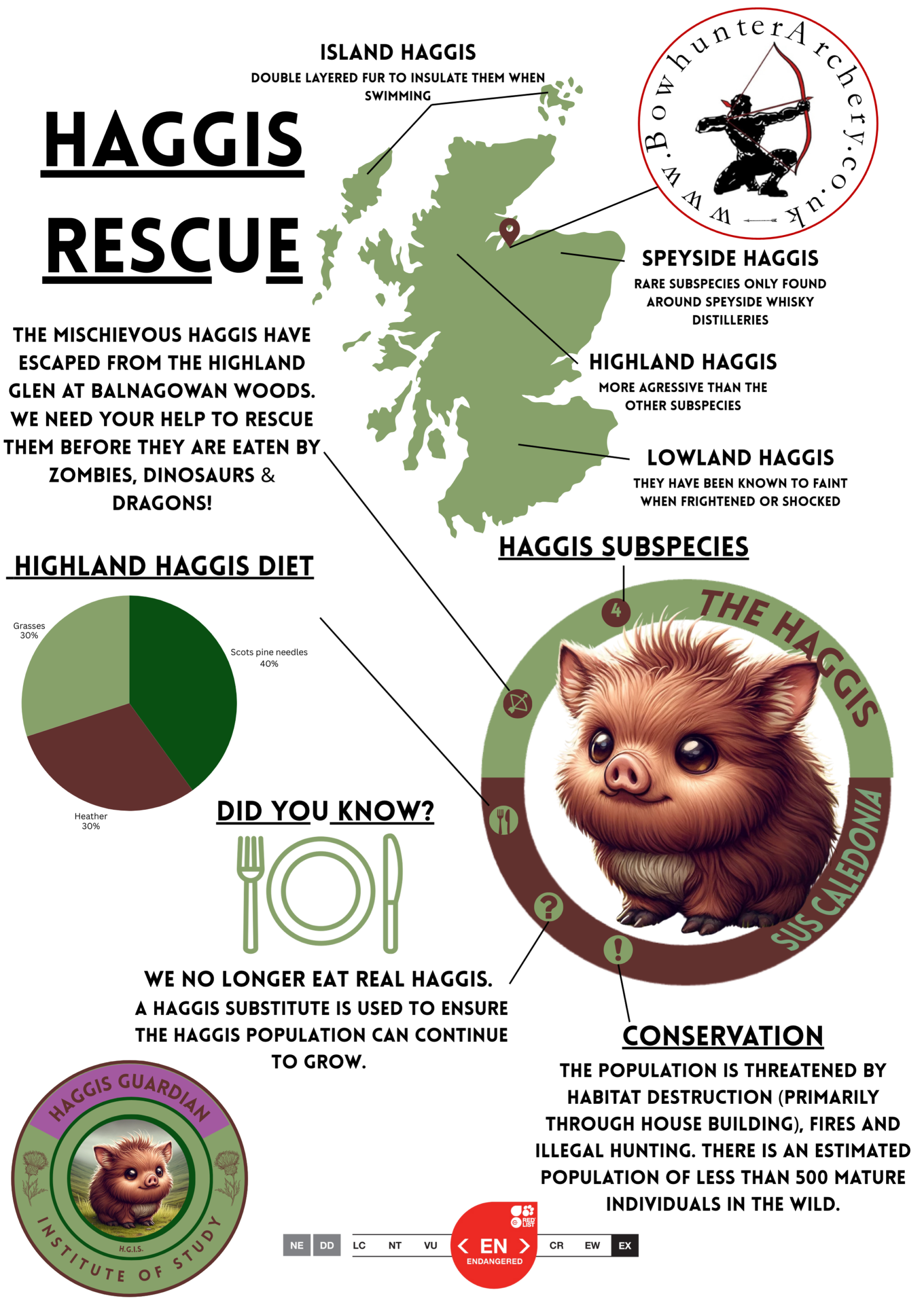
The Scottish haggis species is studied by the Haggis Guardian Institute of Study to better understand its behaviour, habitat use, life stages, and role within Scotland’s natural environment.
Haggis are one of Scotland’s most distinctive and culturally significant native species. Known for their elusive nature and remarkable adaptation to rugged landscapes, haggis occupy a unique place in both ecological study and Highland folklore.
Behaviour
Haggis are generally shy animals, displaying strong territorial awareness and a complex system of social cues. Field observations suggest a high degree of intergenerational learning, particularly in navigation, shelter selection, and foraging behaviour.
Social interactions appear subtle but structured, with younger individuals learning appropriate responses to environmental pressures through observation of older group members.
Life Cycle
From haglets to mature adults, haggis development follows distinct growth stages. Young haglets remain close to protected areas while learning essential survival behaviours, gradually expanding their range as confidence and physical resilience increase.
As haggis mature, behavioural patterns become more defined, with adults demonstrating increased independence, territorial awareness, and social stability.
Habitat and Adaptation
Haggis are well adapted to upland, woodland, and transitional environments. Their physical characteristics and behaviour allow them to cope with variable weather, uneven terrain, and seasonal change.
Habitat choice is influenced by shelter availability, food sources, and the presence of disturbance, with individuals showing flexibility in response to environmental pressures.
Cultural Significance
Beyond biology, the haggis holds a prominent place in Scotland’s cultural landscape. Oral traditions, stories of guardianship, and references to landscape spirits reflect a long-standing relationship between people, place, and species.
These narratives form an important backdrop to modern conservation efforts, reinforcing the idea that understanding and protecting the haggis is as much a cultural responsibility as it is a scientific one.